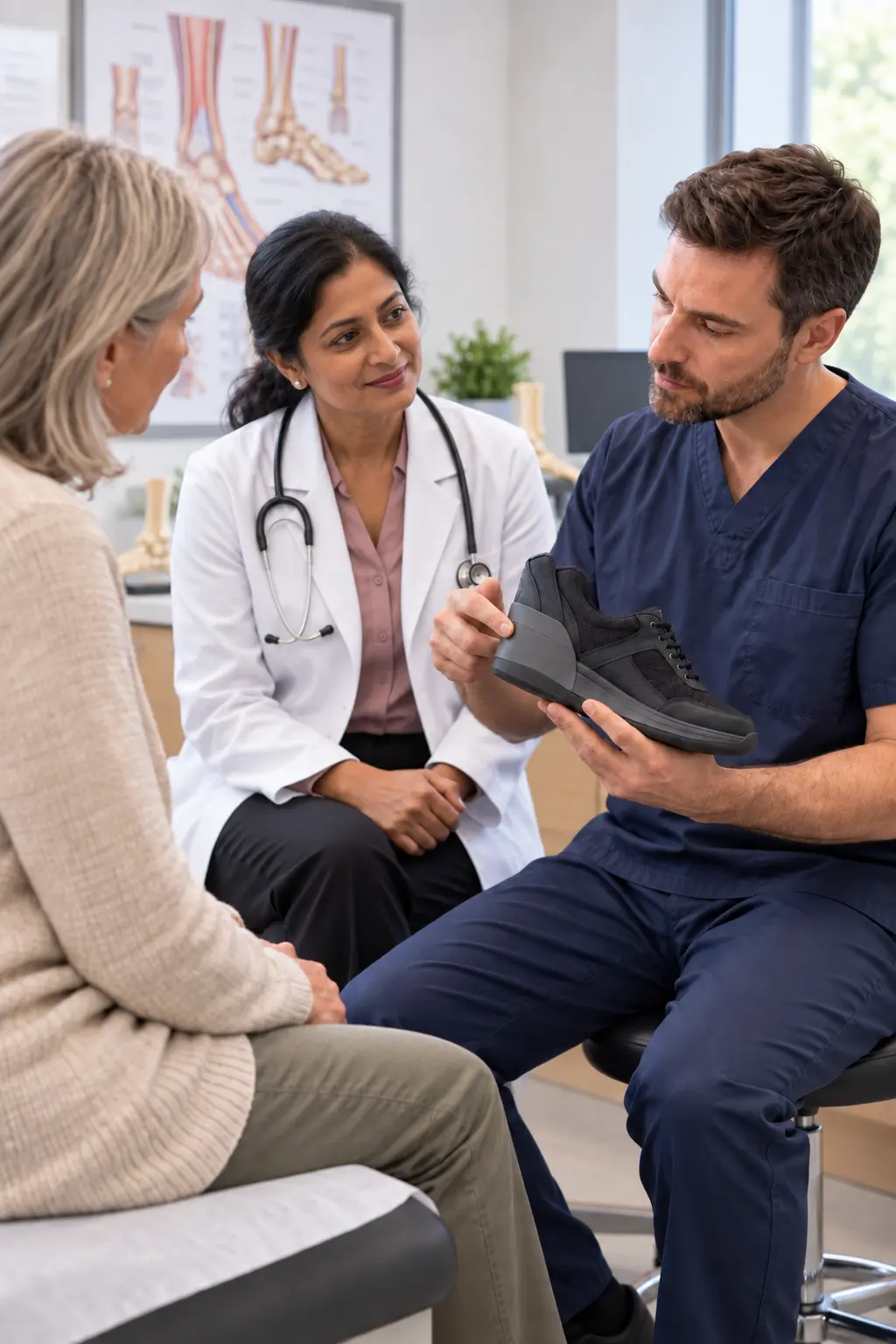
Wonderwalk assesses post-surgery orthotic and footwear needs in Penang. Depending on the case objective, this may involve bespoke insoles, shoe-height changes, rocker-sole footwear or modification, and other appropriate orthotic solutions.
Has surgery changed the way the patient loads the foot, walks, clears the ground or fits into their previous shoes?
01
When an orthotic discussion is useful
A patient may need pressure relief, accommodation, a height change, altered rollover or help managing a changed gait. The relevant question is what function the device must provide at the present stage of recovery.
02
What we assess
We review the current medical instructions, weight-bearing status, walking pattern, pressure, mobility and the shoes to be used. Patients may come with a clinician's direction or contact us directly, but we do not alter the treating team's restrictions.
03
Solutions, fitting and review
If an orthotic or footwear solution is appropriate, we explain its purpose, plan it around the patient's present needs, complete the fitting and review or adjust it when required. Unclear restrictions are checked with the treating team before modification.
Referral questions
Questions about a case
What cases can I refer to Wonderwalk after surgery?
Cases with a defined footwear or orthotic objective, such as pressure redistribution, shoe-height adjustment, altered rollover or an individual in-shoe requirement, can be discussed.
Is a prescription required?
No. Direct enquiries are accepted, but all current medical and weight-bearing instructions should be brought to the assessment.
What information should the patient bring?
Bring the treating team's instructions, relevant reports, current device and the shoes intended for use.
Tell us the post-surgery objective and current restrictions.
Send the operative or rehabilitation instructions that affect footwear and weight-bearing, or ask the patient to bring them with the shoes and current device.