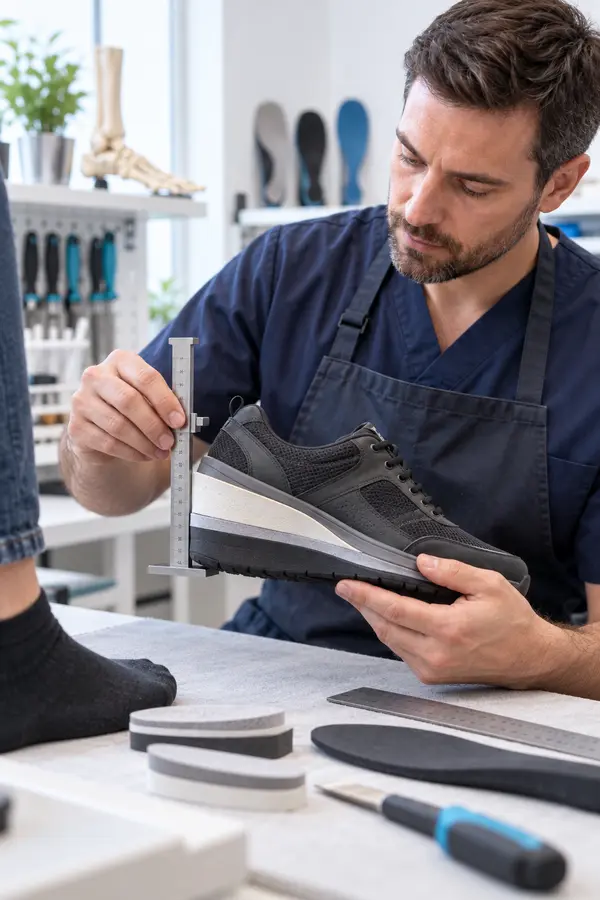
A true difference in bone length and an apparent difference from posture or joint position are not the same. Wonderwalk reviews available measurements, posture, gait and footwear before discussing a lift or shoe-height modification.
Have you been told one leg is shorter, noticed one side of your pelvis sits higher, or started walking unevenly after surgery or injury?
01
Why one side may look shorter
The bones may genuinely differ in length, especially after growth, fracture or surgery. The pelvis can also look uneven because of joint position, muscle control, scoliosis or the way the feet and knees stand. The solution depends on which pattern is present.
02
How we assess the effect on walking
We review medical measurements or imaging when available, compare standing posture and gait, and see how the current shoes or lift change movement. Looking uneven is not enough to decide how many millimetres to add.
03
What Wonderwalk can provide
When a height change has a clear objective, we can plan an individual lift or modify shoe height, then check the fit and walking result. If structural measurement is still unclear, we explain what medical assessment is needed before the shoe is changed.
The RM300 assessment covers foot pressure, gait, posture, foot mobility and a foot blueprint or measurements. We explain findings verbally. A written report has a separate fee. If you proceed with the recommended solution within one month, the RM300 is credited toward it.
Before you book
Useful answers
Can you tell leg length just by looking at my pelvis?
No. Pelvic height can be affected by posture and joint position. We use available measurements and observe how you stand and walk before discussing a correction.
Can Wonderwalk add height to my shoe?
Yes, when the measurement and movement findings show a clear need. The shoe itself must also be suitable for modification.
What should I bring?
Bring relevant X-rays or reports, any existing lift and the shoes you want assessed.
Bring any X-rays or measurements, your present lift and the shoes you use most. Tell us whether the difference followed surgery, fracture or a gradual change.