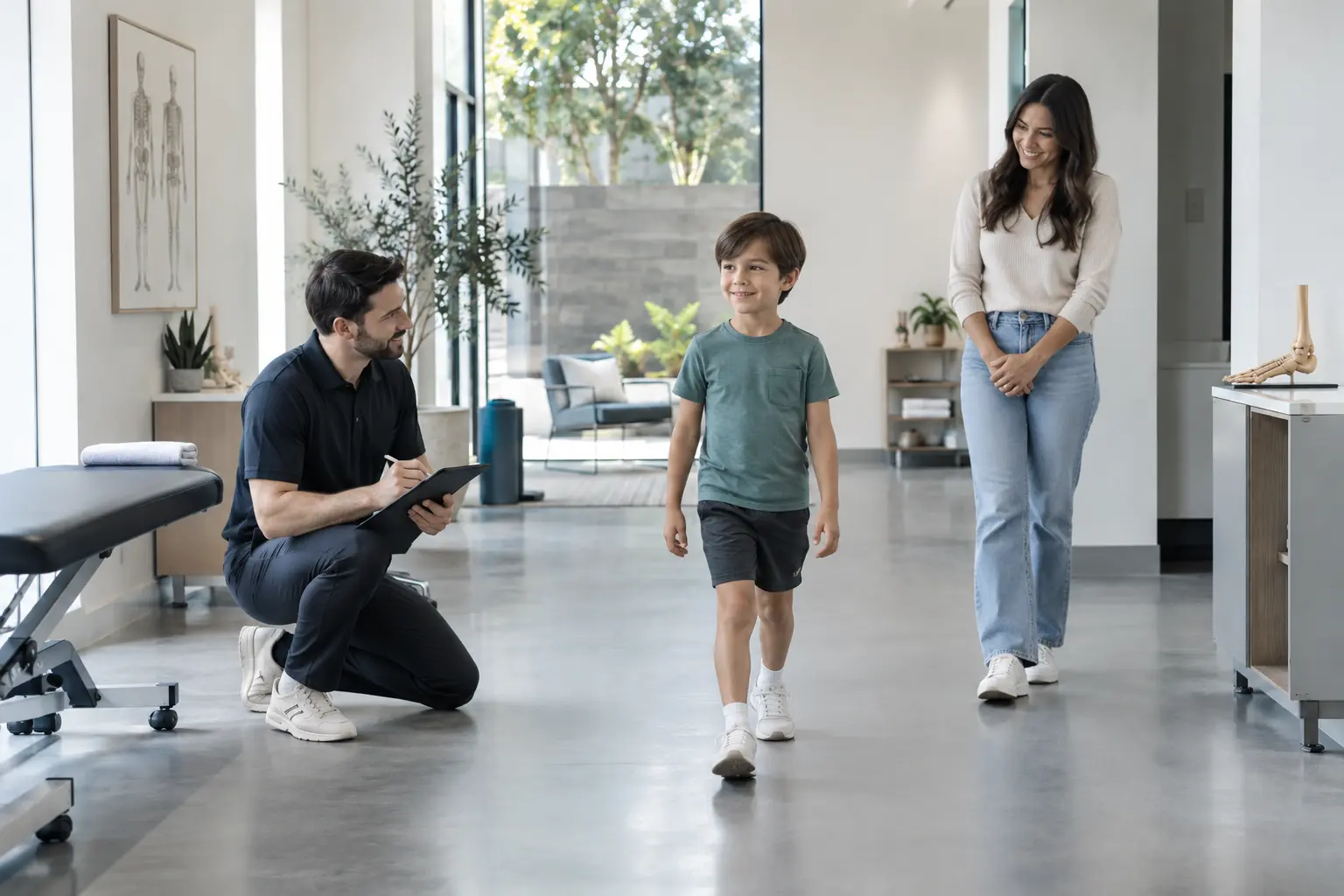
Children's flat feet: assess the child, not only the arch.
Many children have low-looking arches without a problem. When flat feet come with pain, tiredness, tripping, stiffness or footwear difficulty, Wonderwalk assesses the child walking and moving rather than judging the arch by appearance.
Does your child complain that their feet or legs are tired, avoid long walks, trip often or struggle with shoes?
01
When a flat-looking foot deserves a closer look
Parents usually notice more than the arch: a child who asks to be carried, cannot keep up, complains after activity, wears shoes unevenly or has one foot that looks different. Pain, stiffness or a rapid change is more important than a wet footprint.
02
How we assess your child
We watch how your child stands and walks, check foot mobility, map pressure and take a foot blueprint and measurements. School and activity shoes help us understand what the child experiences in daily life.
03
What happens after the assessment
Some children need only reassurance and better-fitting shoes. Others may benefit from simple exercises, medical or physiotherapy input, or bespoke insoles designed for a specific comfort or movement goal.
The RM300 assessment covers foot pressure, gait, posture, foot mobility and a foot blueprint or measurements. We explain findings verbally. A written report has a separate fee. If you proceed with the recommended solution within one month, the RM300 is credited toward it.
Before you book
Useful answers
My child's feet look flat. Does that mean they need insoles?
No. Arch appearance alone is not enough. We first look at symptoms, mobility, walking, pressure and participation.
What signs should I tell you about?
Tell us about pain, tired legs, frequent tripping, avoiding activity, uneven shoe wear, stiffness or a clear difference between the two feet.
Can I have my child assessed in Penang?
Yes. Wonderwalk assesses children at its Tanjung Tokong, Penang centre. Bring the shoes used for school, play and sport.