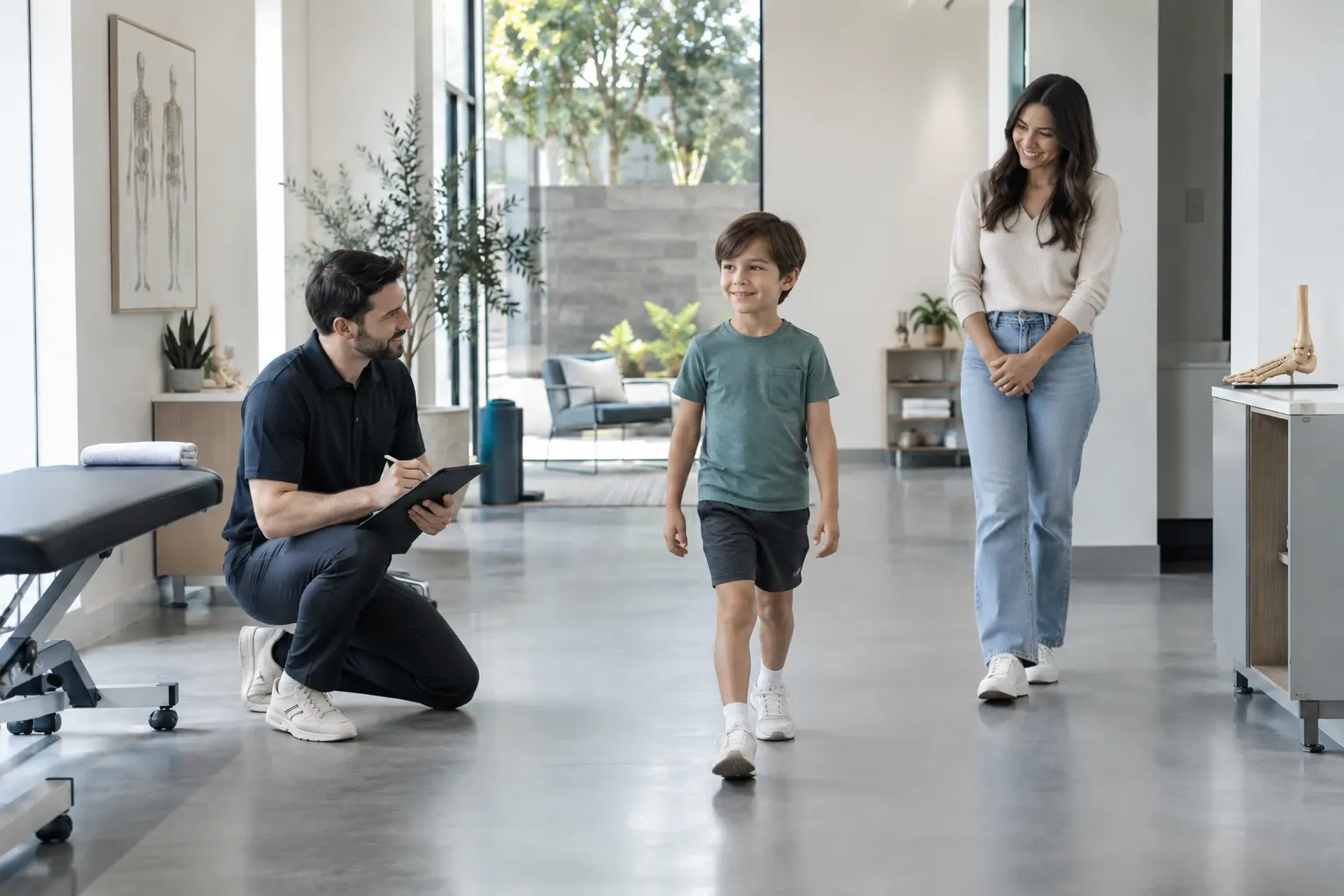
Juvenile bunion: careful assessment for growing feet.
A bunion can appear while a child is still growing. Wonderwalk checks toe and foot mobility, forefoot pressure, gait and shoe fit to understand what is driving discomfort and whether pressure management may help.
Is your child's big toe beginning to drift, rub in school shoes or become painful during sport?
01
What parents often notice first
The big toe may lean toward the other toes, the joint may rub red inside school shoes, or the child may avoid activities because the forefoot hurts. A change that is fast, stiff, one-sided or increasingly painful needs medical review.
02
How we assess a growing foot
We check how the big toe and first ray move, map pressure under the forefoot, observe walking and measure the child's feet against school and activity shoes. We look at the whole foot, not only the visible bump.
03
What we may recommend
The first step may be a wider shoe with the right shape and depth. In selected cases, bespoke insoles can redistribute forefoot pressure and reduce mechanical stress around the first ray, with the aim of improving comfort and slowing progression during growth.
The RM300 assessment covers foot pressure, gait, posture, foot mobility and a foot blueprint or measurements. We explain findings verbally. A written report has a separate fee. If you proceed with the recommended solution within one month, the RM300 is credited toward it.
Before you book
Useful answers
Can a child really have a bunion?
Yes. Juvenile bunions can appear before adulthood and often run in families. Pain, shoe difficulty and change over time are more useful than appearance alone when deciding what to do.
Will an insole straighten the toe?
No. Its role is to manage pressure and the way the foot loads. It may help reduce forces linked with progression in a suitable case, but it does not promise to reverse the toe position.
What should my child bring?
Bring school, sports and everyday shoes, any existing insoles and relevant medical reports.