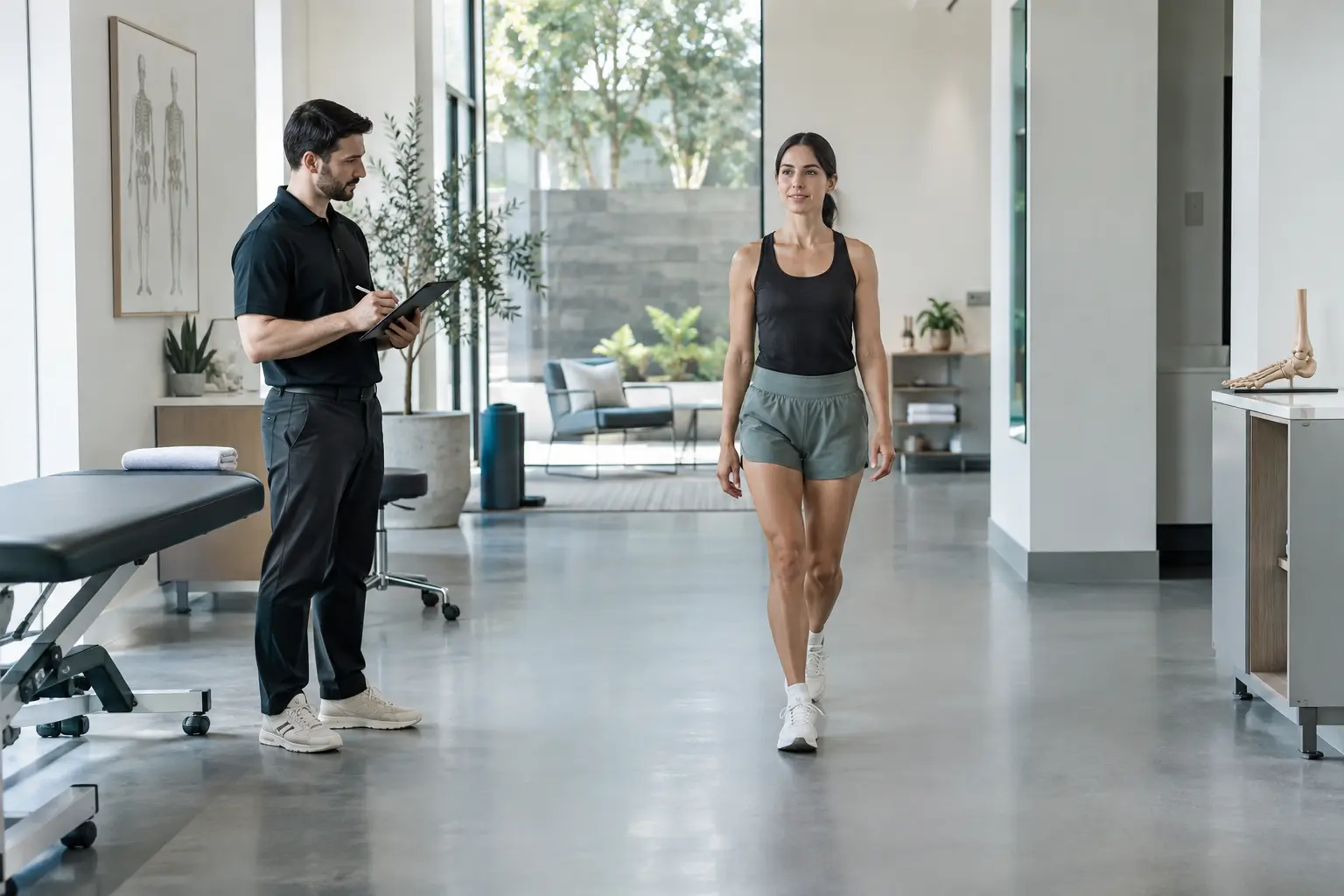
Recurring ankle pain or giving way may involve mobility, balance, foot loading and the way the whole leg controls a step. Wonderwalk assesses those movement factors and explains whether footwear, orthotic input or another clinician is the useful next step.
Does your ankle still hurt or give way months after a sprain, especially on uneven ground or in certain shoes?
01
When an old sprain still affects walking
The swelling may have settled, but the ankle can remain stiff, weak or unreliable. You may avoid one side, load the outer foot, shorten the step or feel nervous on uneven ground. A new injury with marked swelling or inability to bear weight needs medical care first.
02
How we assess the ankle in motion
We check foot and ankle mobility, map the path of pressure through the step and observe the ankle, knee and pelvis during walking. Your work, sports or everyday shoes help show whether footwear is adding to the problem.
03
What the findings may lead to
The answer may be rehabilitation for strength and balance, a more suitable shoe, a defined bespoke-insole objective or medical review. The pressure map supports the assessment; it is not an ankle diagnosis by itself.
The RM300 assessment covers foot pressure, gait, posture, foot mobility and a foot blueprint or measurements. We explain findings verbally. A written report has a separate fee. If you proceed with the recommended solution within one month, the RM300 is credited toward it.
Before you book
Useful answers
My ankle keeps giving way. Can Wonderwalk assess it?
Yes. We can assess mobility, pressure, gait and footwear to identify mechanical factors and decide whether orthotic input is relevant.
Will I need an ankle brace or insole?
That depends on the cause of the instability and the assessment findings. Some people need rehabilitation or medical care rather than an in-shoe solution.
When should I see a doctor first?
Seek medical care after an acute injury if you cannot bear weight, there is significant swelling or deformity, or pain is severe or worsening.