Wonderwalk provides individual scoliosis bracing in Penang for referred patients and direct enquiries. We review the full-spine X-ray and Cobb angle, complete a 3D body scan, arrange fabrication, then fit and adjust the brace when it arrives.
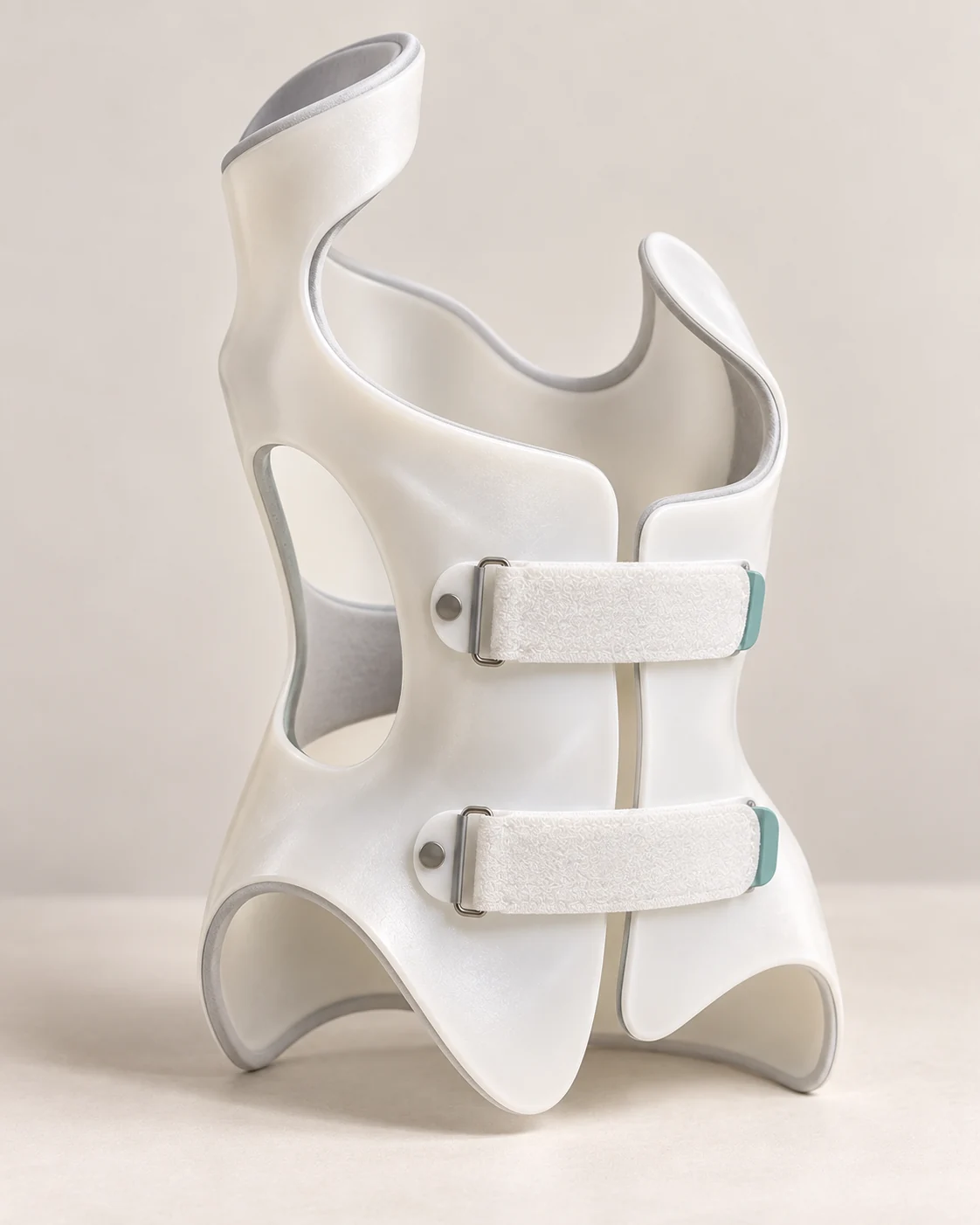
Illustrative brace image. Each brace is made and fitted for the individual.
Do you have a patient who needs a scoliosis brace, or are you a parent with a full-spine X-ray and questions about the next step?
01
What we need before bracing
A doctor may send a full-spine X-ray, report, referral letter or prescription. A referral is not required to contact us. If suitable imaging is not available, we ask the patient to obtain a full-spine X-ray so the Cobb angle and curve can be reviewed.
02
From 3D scan to fitting
We 3D scan the body and send the scan for individual brace fabrication. When the brace arrives, we complete the fitting and make adjustments or add padding where needed for the individual case.
03
Referral and follow-up
Healthcare professionals can share the case objective and existing management plan. Direct enquiries are also welcome. Where the Cobb angle is above 20 degrees, Wonderwalk discusses bracing and appropriate medical follow-up rather than treating the number as an automatic prescription.
Referral questions
Questions about a case
Can a patient contact Wonderwalk without a doctor's referral?
Yes. Patients and parents can enquire directly. We still require a suitable full-spine X-ray for Cobb-angle and curve review before proceeding with bracing.
What should a referring doctor send?
A full-spine X-ray and any relevant report, referral letter, prescription or case objective are useful.
What happens after the brace is made?
Wonderwalk fits the brace when it arrives and makes adjustments or adds padding where needed. Ongoing medical follow-up should continue with the patient's treating team.